
Nutrition in Shift workers: New publication
Review of a recent publication on nutrition in shift workers
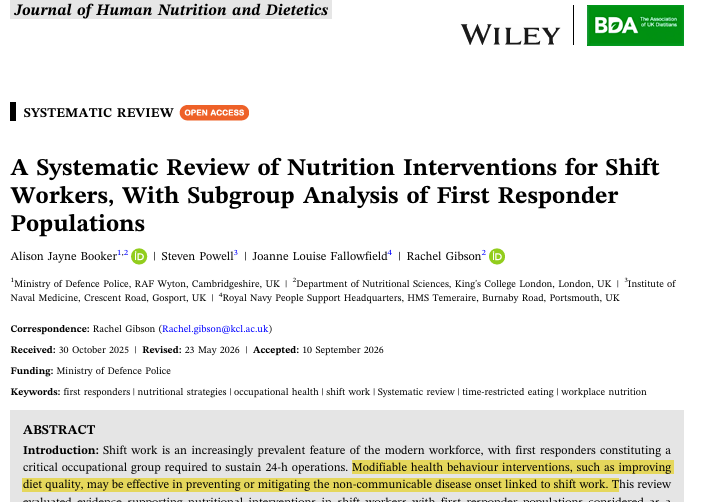
A recent systematic review has been published looking at nutrition interventions for shift workers, with a particular focus on first responders.
It’s well documented that working shifts can impact health — and that shift work affects how and what we eat. Shift working isn’t going away; around a third of the workforce now works nights. With our 24/7 culture it’s likely to become even more common. So it’s important we take this seriously. This paper looked at a huge number of studies, and although only a smaller number met the strict criteria, it means the review itself is robust and reliable.
The challenges of eating on shift
Unfortunately, the evidence shows that shift workers tend to have diets lower in fruit, vegetables and wholegrains, and higher in saturated fats and sugar. Eating at times when our bodies think we should be sleeping affects how we process food. It can increase inflammation, disrupt appetite hormones (so we crave higher‑fat, higher‑sugar foods), and make blood glucose harder to manage.
And of course, there are the practical challenges: unpredictable meal breaks, call‑outs, limited food availability at night (especially healthier options), and the simple fact that you’re working against your natural body clock while trying to stay focused and alert.
“Just tell me what to eat!”
Shift workers often ask for clear rules however, this review suggests there isn’t enough evidence yet for specific, one‑size‑fits‑all dietary guidelines. That makes sense given that we are all individuals. There is no single “must‑do” rule, just as there is no single perfect diet. Instead, there are several helpful recommendations that can be adapted to each person’s health, lifestyle, family commitments, and shift pattern. The authors also highlight that more high‑quality research is needed, especially for first responders.
These are some of the key take‑home messages:
🕒 When to eat
Across many of the studies, eating less and in some cases not at all during the night‑time hours (1am to 6am) is better for metabolic health, our odies are not expecting food at these hours and therefore horones like insulin are less effective at night. Eating less over these hours led to improvements in glucose tolerance and other cardiometabolic markers.
Top line: Try to minimise eating between 1am and 6am where possible.
The types of foods
High‑carbohydrate foods, especially those that are quickly absorbed (like sugary snacks), have a bigger impact on insulin at night than they do during the day. This means your body finds them harder to handle when you’re working overnight.
Can certain foods help with focus?
There is some evidence that protein‑rich foods may help improve alertness. This doesn’t mean a huge meal, it could just be even a small protein‑based snack like a high protein, low sugar yogurt.
Diet quality matters
Overall diet quality is more important than focusing on individual nutrients. A pattern of eating that includes wholegrains, fruit, vegetables, lean proteins, and lower amounts of animal fats and sugar plays a role in reducing inflammation. Inflammation is linked to chronic conditions such as heart disease, diabetes, and dementia. Night time is when our bodies are in recovery mode and night shift working plays against this. Shift workers may have less overall sleep time.
Bringing it all together
Where possible, try to:
- align eating with daytime hours
- choose foods that have lots of nutrients instead of those that are high in fat and sugar
- keep night‑time eating small and nutrient rich
Planning ahead really helps. Batch‑cook when you can so meals are ready during the week. And think about snacks too, remembering to have them with you on shift makes a big difference. Options might include nuts, fruit, yogurt pouches, cooked meat portions, vegetables, or oatcakes with houmous.
Small, practical changes can support your energy, focus, and long‑term health despite the reality of unpredictable shifts.